Chop up your books
This is my appeal to readers everywhere: you should take a knife to your books.
(And no, not in the sense that the destructive AI-scanners do.)
Like apparently everybody else, my book club recently picked out Lonesome Dove. I’m not a Western guy, but it’s clear that this pulitzer-winner earned it. It’s good.
But come on: this is an 850+ page paperback! It is what I call Too Big.
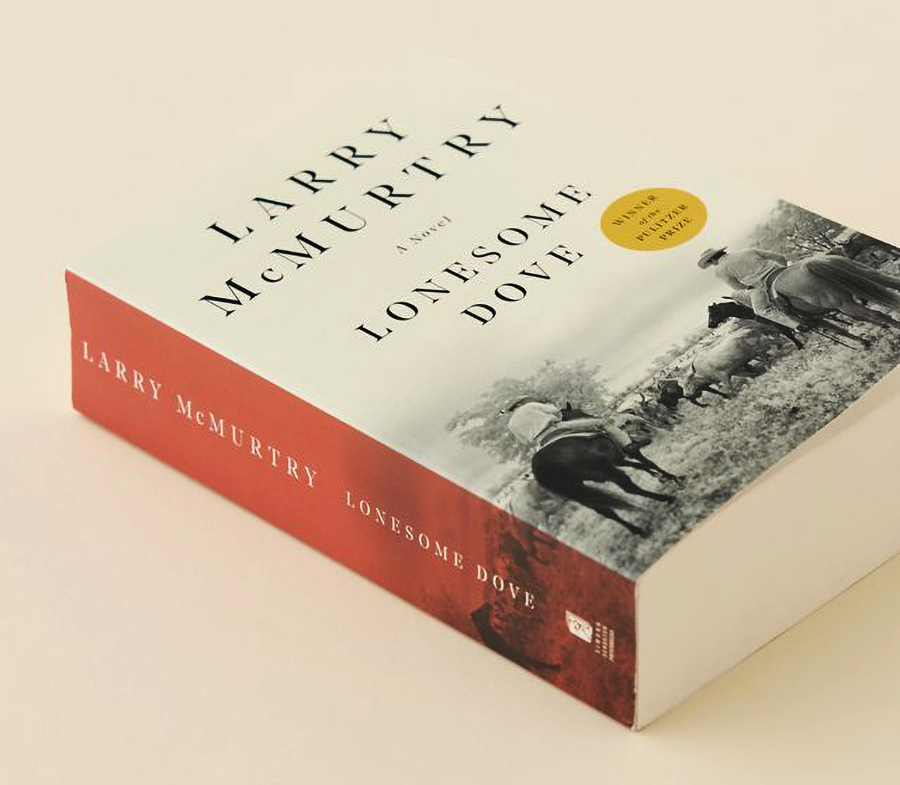
It’s going to tire out your hands to hold up an 850-page book for the time it takes to read an 850-page book. If you read in bed, it’s going to tire your arms out, trying to hold this giant tome over your head. If you want to take this book on a plane or bus, it’s going to take up half of your bag.
So, I would like to recommend you to a practice I call Chop That Book Up Into Reasonable Sizes.
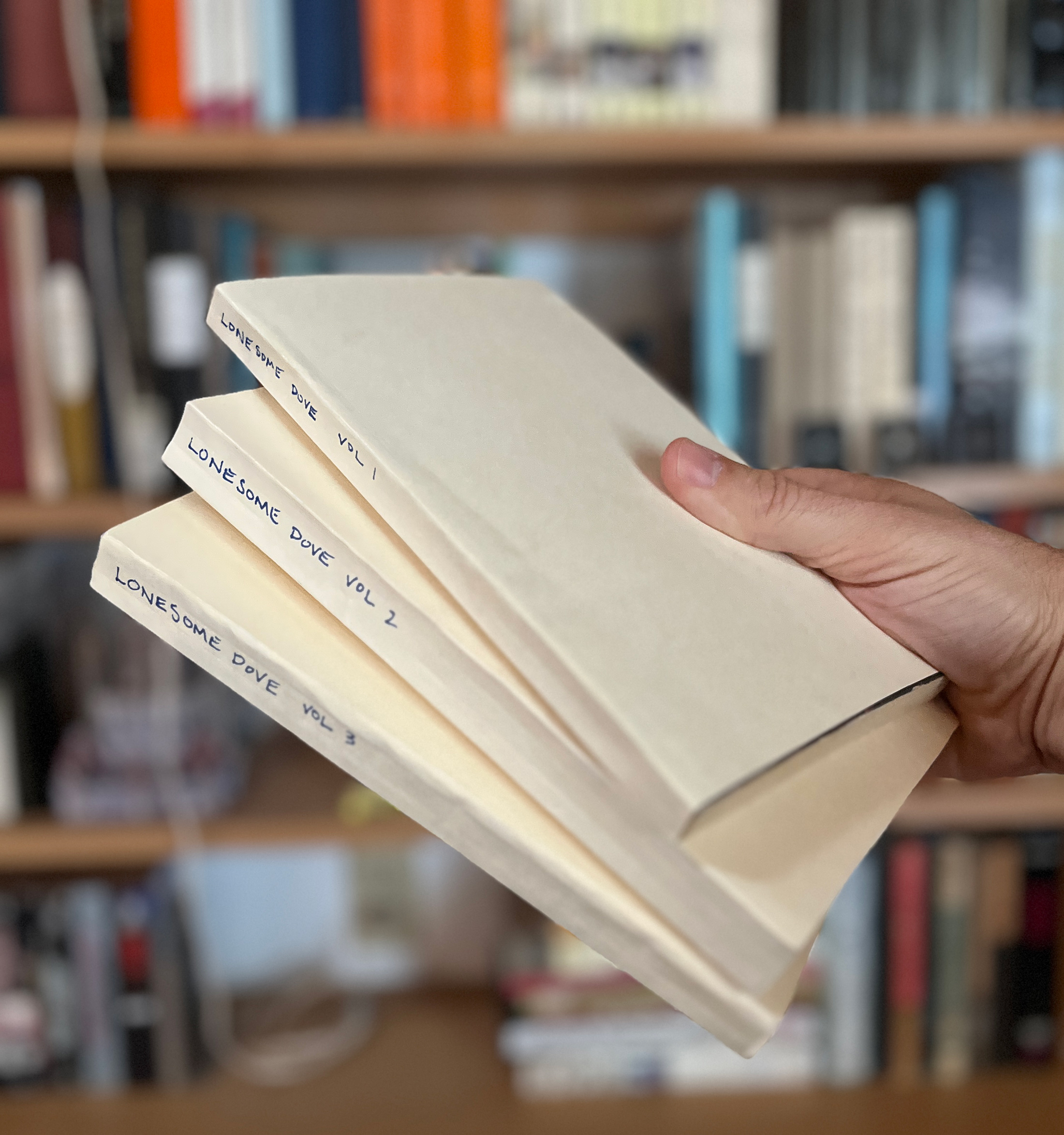
It takes a few minutes and very few tools. You also can enjoy reading reasonably-sized volumes of big books.
At the risk of parroting ‘you can just do things’, I’m telling you: You Can Just chop up your book. Nobody will call the cops. Authors don’t mind! (well, I don’t think so, and I wouldn’t mind if you chopped up my book, which I freely admit is also Too Big).
Here’s what I do when the book is Too Big:
- Buy a copy. Don’t do this with library books.
- Paperbacks are easiest but hardbacks work fine too. Think about the format you like to read and look at its pages. Do you like the type sizing? The margins?
- Find the natural break points. Lonesome Dove is a great case here; it’s divided into three Parts, and each Part makes a great smaller volume. But otherwise you’re looking for chapter breaks.
- Crack that spine. Bend the book alllllll the way open at the first break point. Manhandle it. If the book is perfect-bound (which means the pages are glued together along the spine, most paperbacks are), you can bend the spine backwards enough to see the glue strip. If you’ve got a hardback that’s actually stitched together, then look for a break between signatures (those are the groupings of pages that are stitched together). Signatures are still going to be glued together in most cases. Here’s a comparison of binding types.
- X-acto that baby. Carefully slice between the sections, right into the glue. Bookbinders glue is great stuff - you can slice into it neatly with a good sharp blade, but you won’t mess up the glue’s grip on surrounding pages.
- Voila: you have volumes. Next you’ll want to bind it in some new ersatz cover. If you try to carry around just the section of the book without any cover, you will soon learn what covers are for! Individual pages will snag, rip, and peel off. Trust me, you want a new cover.
- You can use anything, but I recommend a manila folder. These are great: firm enough to protect the book block (the actual pages), but cheap and disposable feeling. Fold a manila folder around your new smaller volume. Make sharp creases. Trim it to size with your x-acto blade.
- Then glue it on! You can get bookbinders glue, but honestly Elmers will work just fine. You’re not binding this book to make an heirloom: you’re rebinding it for your own convenience. Smear a line of glue in the new spine, and use binder clips will hold the manila folder in place. Let it dry.
- Label it! I think a bold sharpie does the job here. I’ve had books where I gave it more detail, but I love the unpretentiousness of a marker.
- Enjoy your reasonably-sized book.
On owning books
I love books.
Like, obviously. Reading is my primary form of entertainment. I work from home in a library-converted-to-office, with my desk sitting agains the only wall that isn’t covered by books.
I track my reading. I’m not keeping score; I just have a poor memory and so I like taking notes on what I read and what I want to remember.
And I do like OWNING books. I don’t shy from the physical manifestations of ownership either: they all get marked with a custom Ex Libris rubber stamp that I made in college. I write in the margins. I tape in supplemental material. I even chop up large volumes and rebind them into more convenient packages.
But I have reached a point where I am increasingly confronted with the question that plagues every book lover: why do you own all of these?
My guiding principal on book-buying used to be: only acquire it if you intend to read it more than once. That means many times I would read something from the library, and then go buy myself a copy to keep. Sometimes there’s a book I want to read for the first time, and it’s just so much easier to pick up a throwaway used copy. And sometimes, I’ll admit, I buy and keep books for sentimental or ego reasons. (There’s a shelf dedicated to ‘my friend wrote this.’)
But there’s aspirations and aspirations. When I put my hands on a book to cull the collection, I usually think: oh, I want to read this again. But I’m middle-aged! The number of books I can plausibly read again is limited, and I still love reading NEW books.
And I’m running out of space. The shelves are full. I certainly edit and discard stuff frequently, but this week I really started to think I could let a lot of these go.
Like: fifteen years ago I was interested in reading everything I could about Prester John, and collected maybe twenty semi-rare books on the topic. I enjoyed that season of reading and collection - but will I ever dip into those again? Probably not.
Or: we collected a whole bunch of young adult fiction that I loved, with the idea that they’d be available for my kids as they grew up. But surprise: the kids of two avid readers turned out to… prefer their screens? Go figure.
So: I think that editing these shelves is just going to be an ongoing process of evaluation and culling. And a bit of saying goodbye to a planned future that isn’t going to happen.
What a weird feeling.
Stealth
I’ve been working for the last few months on a new project/product, and trying to get the whole family involved. It’s an original idea of Trudy’s, and I thought it would be really fun and interesting to make it real.
Thus far it’s been a lot of organizing and planning on my side and not a lot else - but this week we’re going to an onsite facility to do a pilot manufacturing run. This feels crazy, but definitely the kind of task to categorize as ‘you can just do things.’ More details soon, but of the many reasons I wanted to try this:
- it’s a consumer product that we can sell directly
- it’s physical: it’s got to be made of real material and manufactured in a real place
- it’s local: there is a natural advantage here where we live in Kansas; there are pilot labs and material sources nearby
- it’s fun
If you read between the lines on the first three items, you might wonder: is Matt trying to AI-proof something?
Kind of? Definitely in today’s environment, the side projects that sound most interesting are ones where I can’t imagine Claude replacing it tomorrow. So it certainly makes this project more interesting.
We’ve been working on development but NOT announcing anything yet or sharing process, which is really kind of a dumb way to go about a consumer product. I think it would be smarter of us to be sharing the details on social as we go. So we’ll definitely be recording things this week - but I really need to get us to break the bad habit of working in stealth. People like to see progress!
Anyway: pilot lab day is Thursday.
Emerging Technology
This fall I’m teaching a new class (to me) in the IXD Interaction Design program at KU: Design for Emerging Technologies. I’m pretty excited about it, and we’re a few weeks in.
This was a new class last year in the program, so it’s only been taught once. And as usual I have an alarming amount of carte blanche to plan my own syllabus.
(Can one have degrees of carte blanche? Seems like perhaps it’s a binary term. You don’t get a percentage of a blank check. Let’s say I have carte blanche, and it’s a bit alarming.)
But really I’m excited! Given that so much of the frontier in design right now is working with our LLM/AI/robot friends, I’m going to have them start off with getting familiar with tools: markdown files, CLIs, handling a git repository. This will be a challenge at first for many students, because the program is not very technical. Most have never looked at their Terminal, and I joke that they are scared by monospace fonts. But I think it’ll pay dividends in their real careers, besides unlocking a lot of capability just for this class.
This week we’re going to kick off a project using ToughDesigner, which I picked because:
- it’s new to all of them
- it’s new to me
- it’s an intimidating piece of software, even though it’s got a visual interface
- it’s got MCPs so we can have claude drive it
- and mostly you can make very impressive things with it
The goal will be to get up to speed quickly so you can understand what the tech can do, and THEN apply your design toolkit to it.
If all goes well, they should feel empowered that they can approach a totally foreign tool and fumble their way towards designing something interesting.
And it will also give me a chance to channel my inner Richard Branham and shout “DESIGN is DESIGN is DESIGN is DESIGN.”
Running Your Own Penny Press for Fun and Absolutely Zero Profit
Here’s the story of how I ran an ambulatory penny press.
You know those souvenir penny press machines you find at tourist traps? We made one. But instead of a single overrated attraction, our machine moves around our city, highlighting local favorite businesses. It’s called Local Crush.
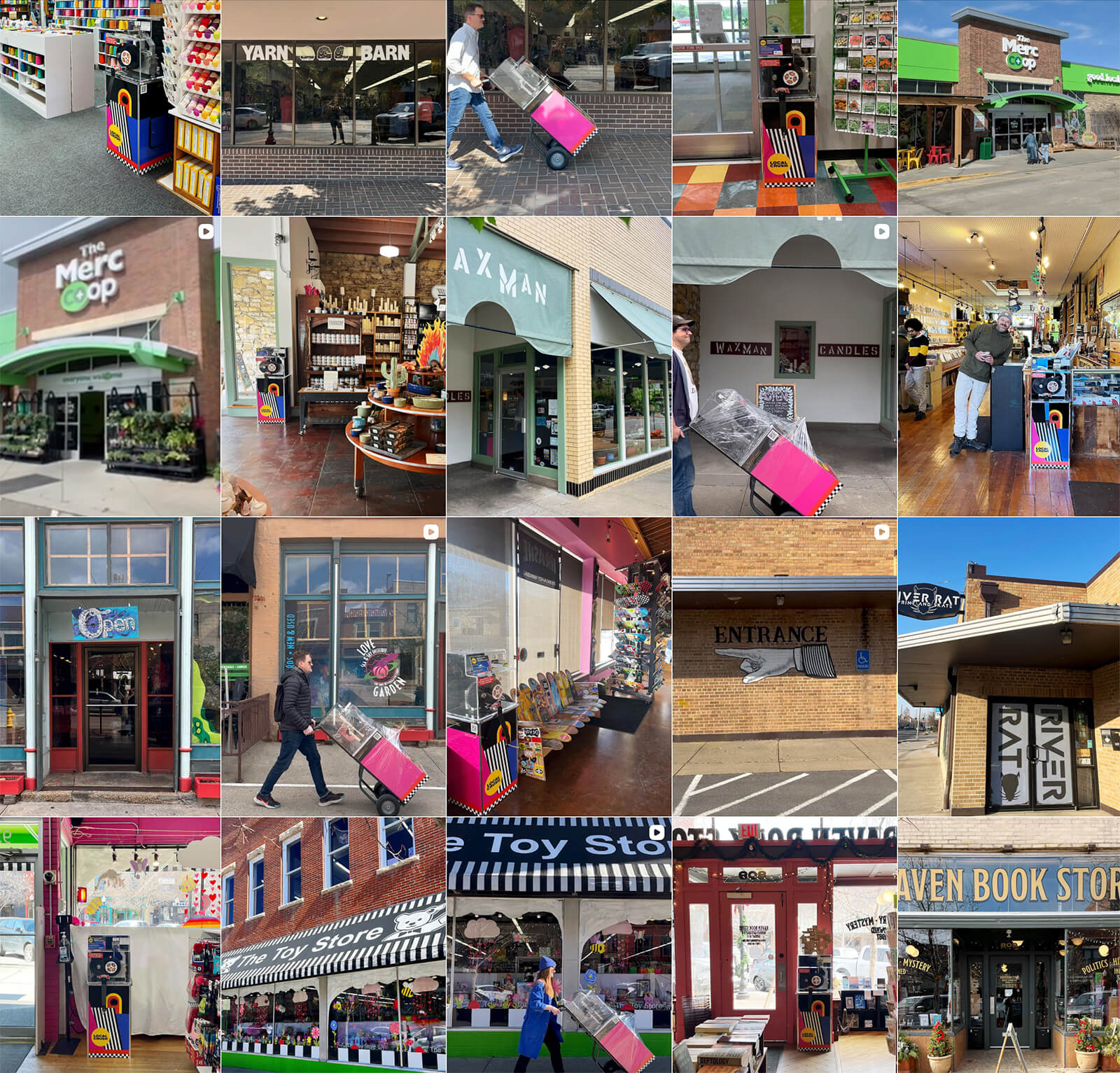
We ran Local Crush for a full year-long circuit, with the penny machine hosted at twelve local favorites. Each month the host business chose a local charity, and all the quarters spent go directly to that nonprofit.
It’s a limited-time opportunity for penny collectors - visit each location once per year, and collect all the designs.
This post will be a recap that covers:
- what we did
- why we did it
- how it went
- and should you do this in your city?
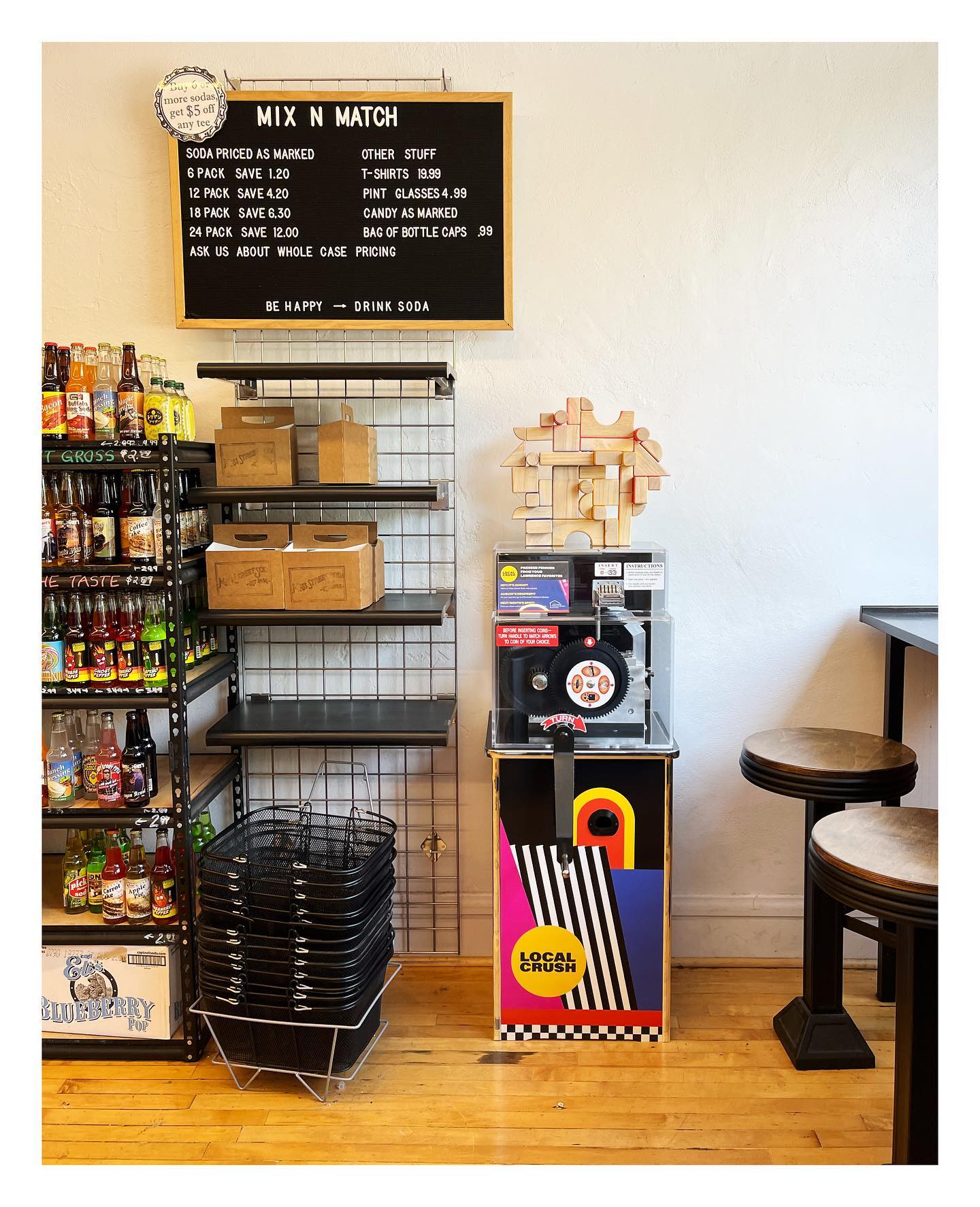
First, here’s what it looks like, in one of our host stores:
We documented the journey mostly on instagram! But this is my restrospective report.
Why we did it
Our family has always liked collecting pressed pennies. We’re not super hardcore about it, but if a place we’re visiting has a machine, we’ll definitely get one. A pressed penny is kind of the ideal souvenir: they’re super cheap, they can only be attained by visiting the location, and they don’t fill up your suitcase (or your home) with junk. You can keep a lifetime’s collection in a spare jar.
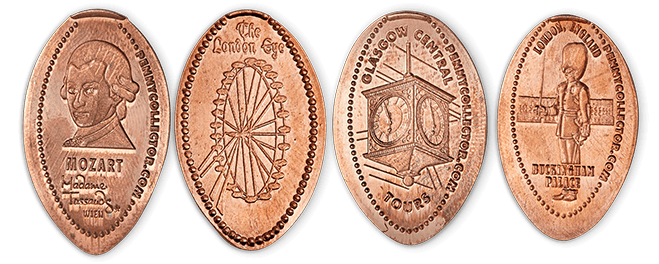 You know, like this.
We’ve always imagined owning one of these machines. But I don’t run a tourist destination! And then the more we thought about it, we wondered - why should the tourist traps have all the fun? Wouldn’t it be great if the darling small businesses we love had this too?
So that’s what we did.
What we did
Well, we ordered one. There are a few companies around the country that still make these machines, and while it was a little more complicated than just picking something up on amazon, it’s not that much more complicated.
First, however, we started talking to the proprietors of our favorite local businesses. It’s kind of a weird pitch: would you let us station a penny press machine in your business? And use your logo to make a pressed penny souvenir for your business? And donate all the money to a charity? But it’s only there for a month? Certainly it took some explanation here and there.
But in general: yes! I don’t think we had anybody turn us down, once we got the idea across.
After we found the right vendor, we worked with them to set up the first two die wheels. Our penny press can hold 4 custom designs, and so we used three spaces slot for a local business, and then one for the Local Crush brand itself. I did a lot of variations.
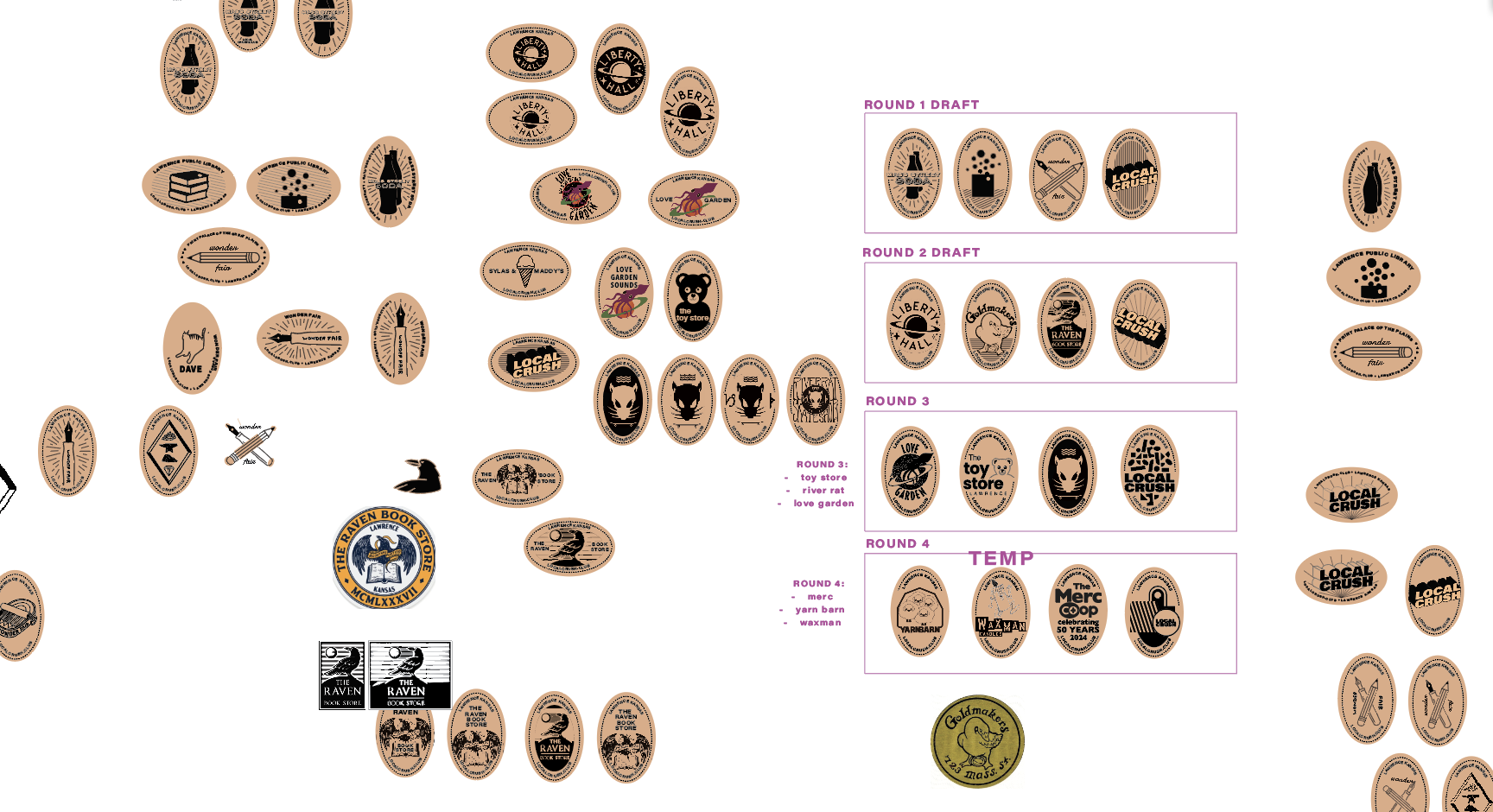
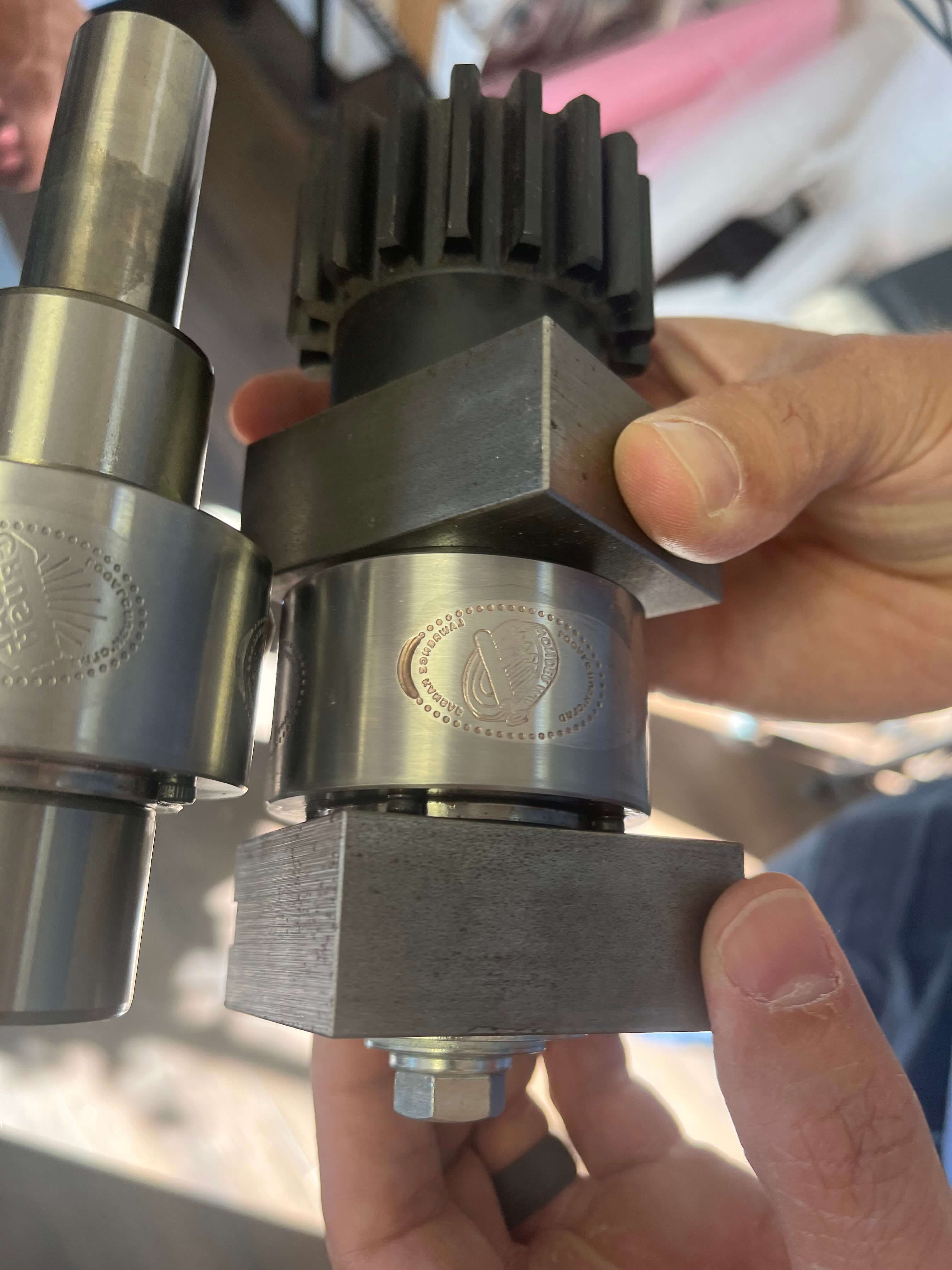
With that plan, we need four separate die wheels, and we need to change them out once per quarter. The die wheels look like this:
Once we had the first two wheels, we put our order in with the machine manufacturer, and they built out the cabinet itself and the die wheels. We drove out to Colorado and loaded it up into our car to drive home!
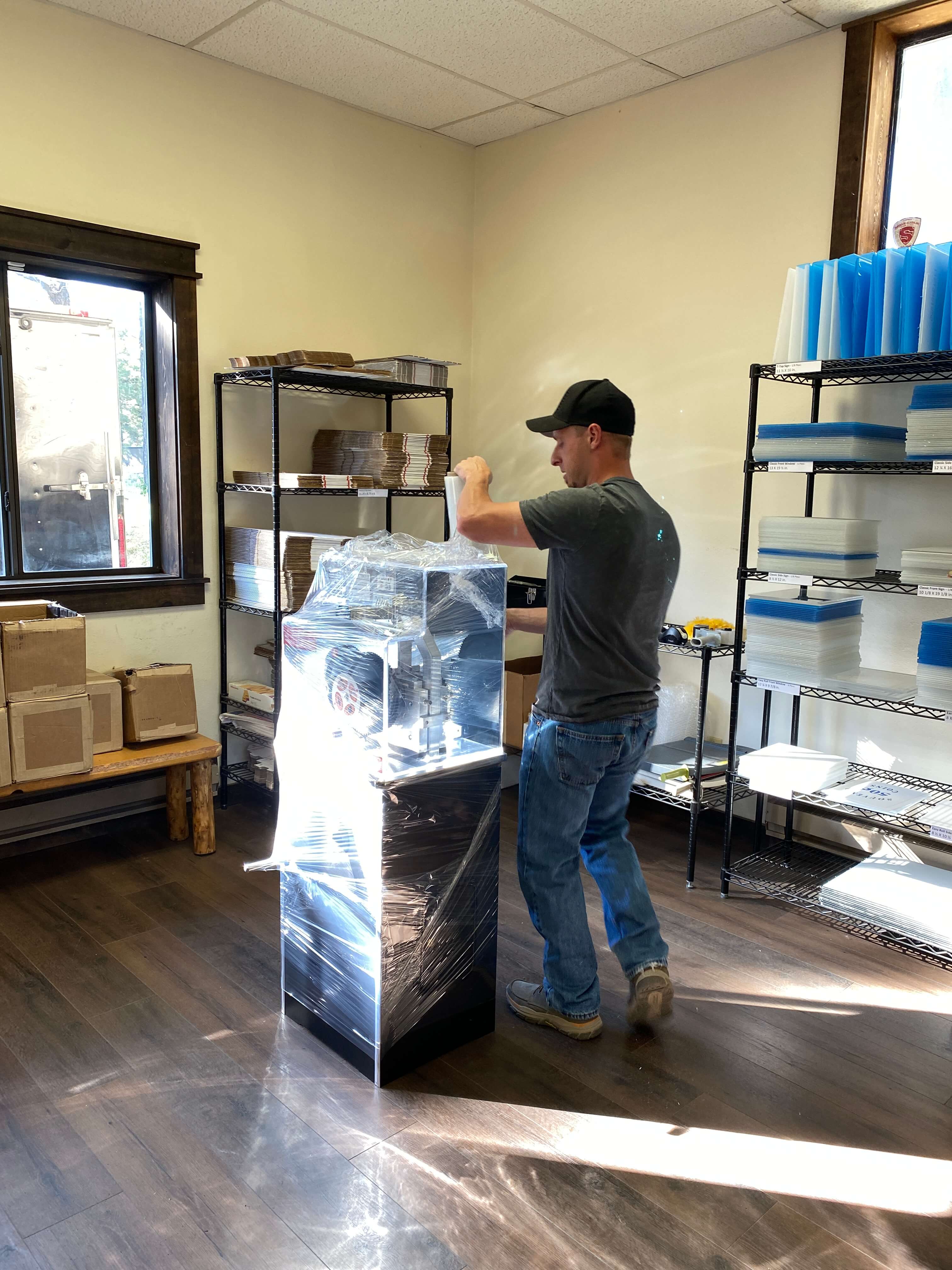
The machine itself is kind of ugly, so we designed a vinyl wrap for it, and Erika constructed a big eye-catching topper sign.
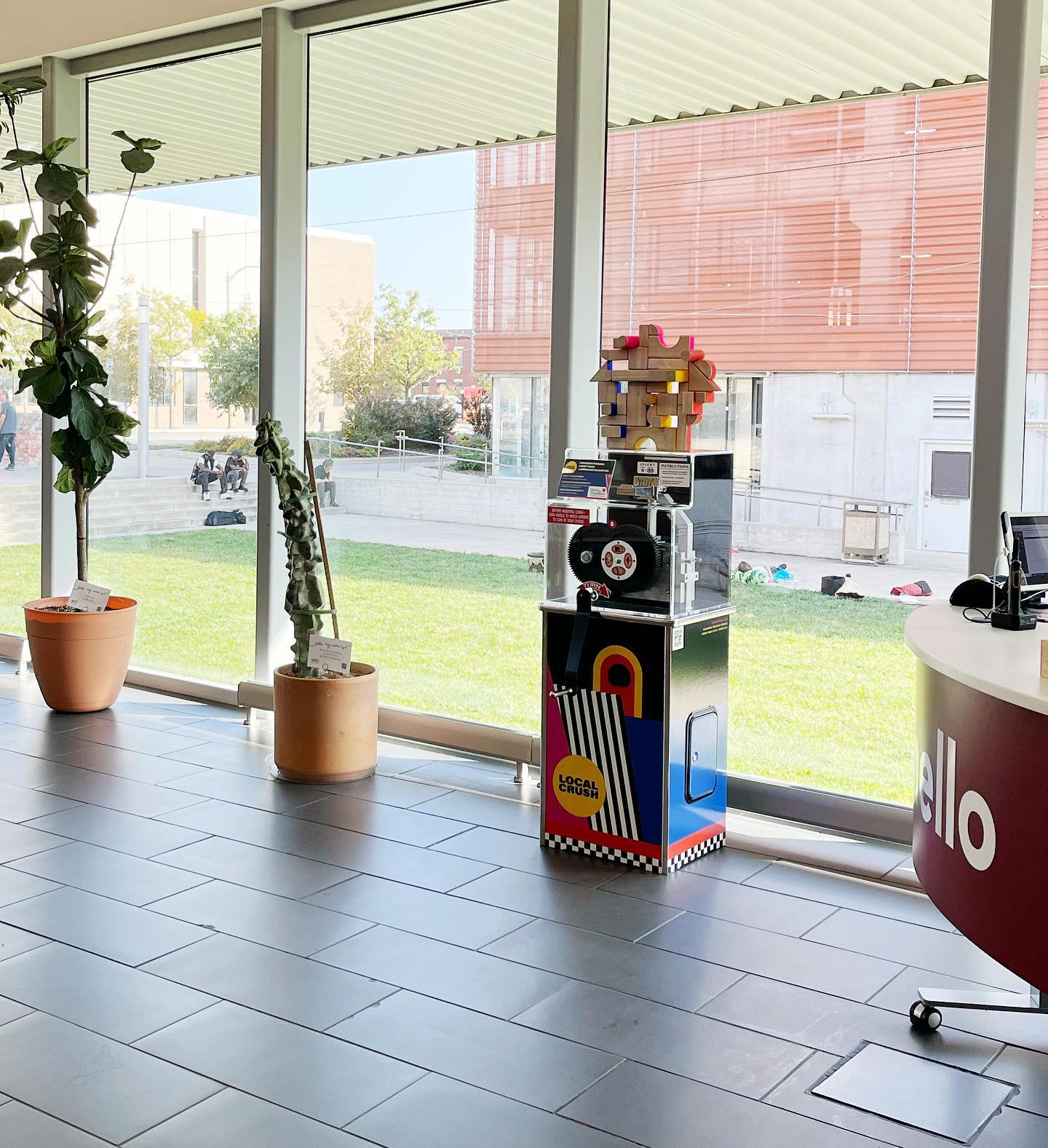
How it went
It went great, I think?
We definitely achieved the first goal: make the press, move it around the city, and draw some attention to local favorite shops and charities.
- Total locations: 12
- Total nonprofits: 10 (some stores chose the same charity)
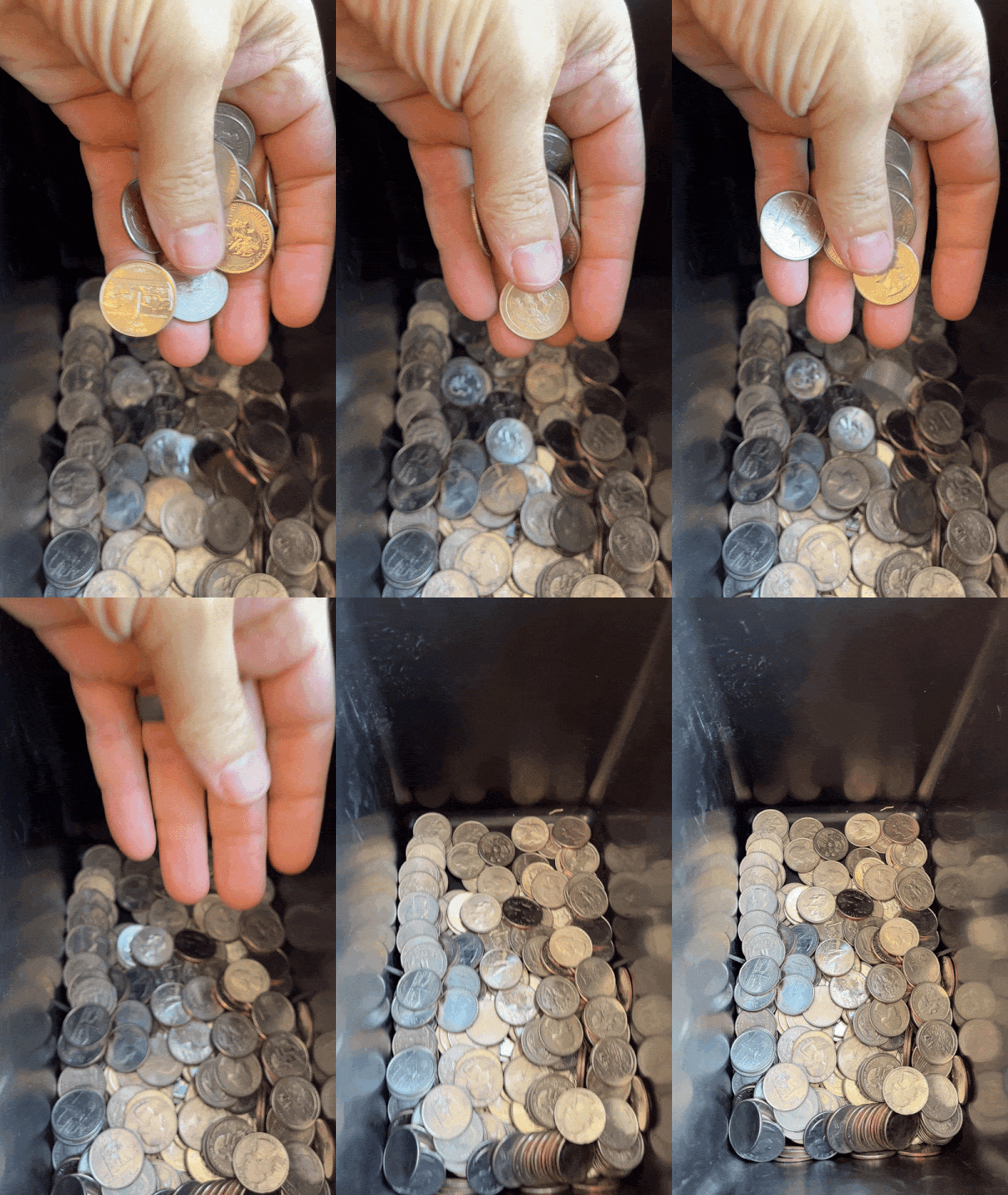
- Total raised for local charities: $1380.00
- Total pennies crushed: 2,760
Could anybody make a profit at this? Not the way we’re doing it, that’s for sure. Did we spend more on the press than we generated in quarters? Definitely. Plus, of course, we gave away all the quarters. Even if we were keeping the proceeds this would have lost money. But that wasn’t the goal, of course - we wanted to create something new for our city.
I often thought about how this would compare with a ‘normal’ penny press, where we are in a tourist trap location and relying on throughput of lots and lots of foot traffic. This is a different model, of course, relying instead on repeat visitors. I suppose even if we repeated this process, we could eventually break even and recoup the cost of the press itself.
What’s next
The actual day-to-day of running the press was… kind of a hassle? Not a big hassle. But we moved the press every month, and that means every month we had to coordinate with store staff to let them know when we’d make the transition (and remind them that they agreed to this a year ago and make space for it). Then we’d have to go pick up the press, and get it established in the new location. No a big deal, just a minor schlep.
But! We got to know the owners of twelve local favorite businesses, and in some very small way give back to our community. That was the best part. We had several other businesses reach out to join the next cycle, which I think is a vote for its future.
