The Cheesey Day News Weather Report
One of our homeschool/pandemic projects, mostly spearheaded by Editor-in-Chief Trudy, was The Cheesey Day News, a local paper that the kids produced. We’ve done 8 issues so far? They write stories, fill it up with games and puzzles, and have even taken some ad dollars.
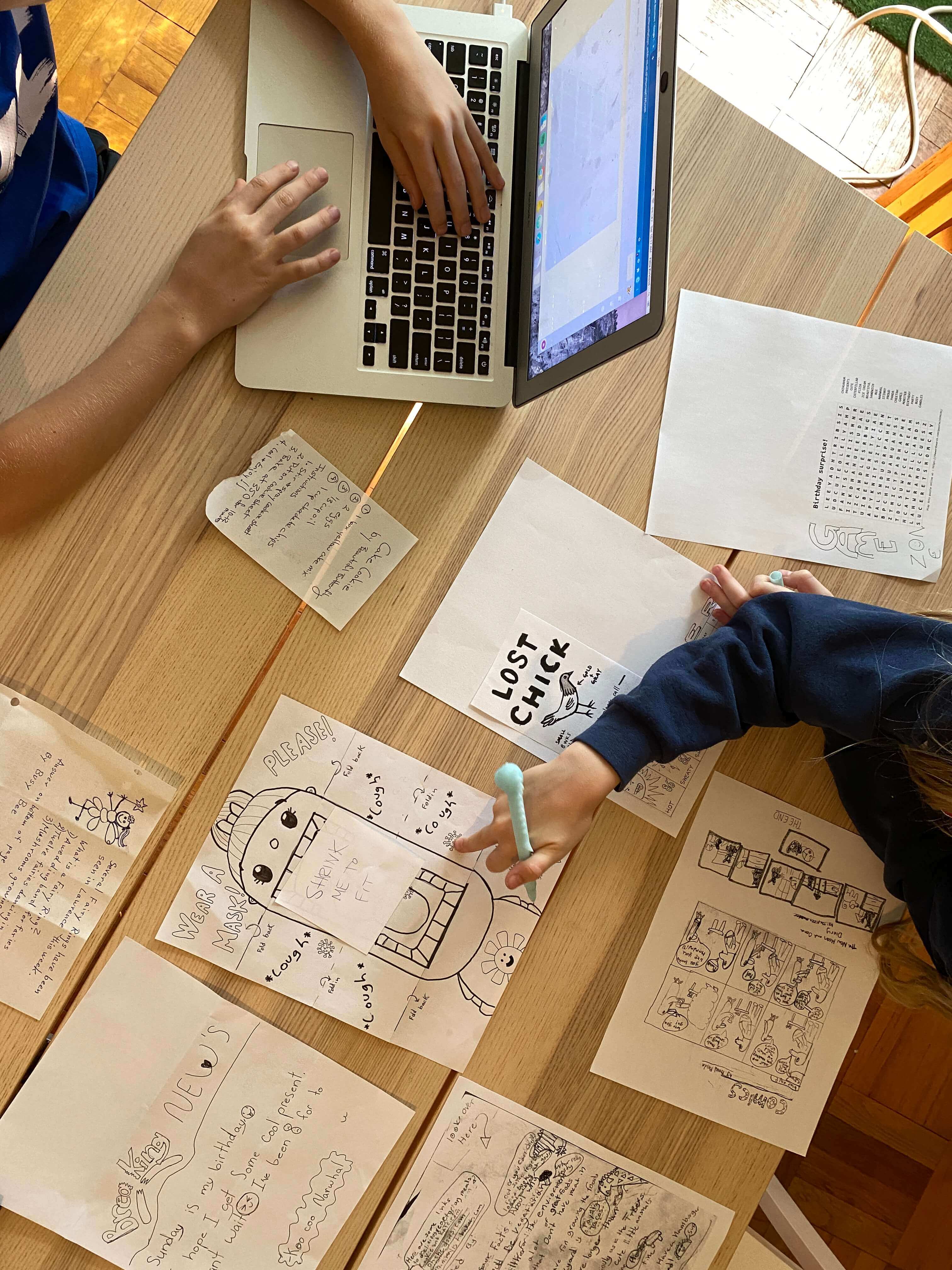
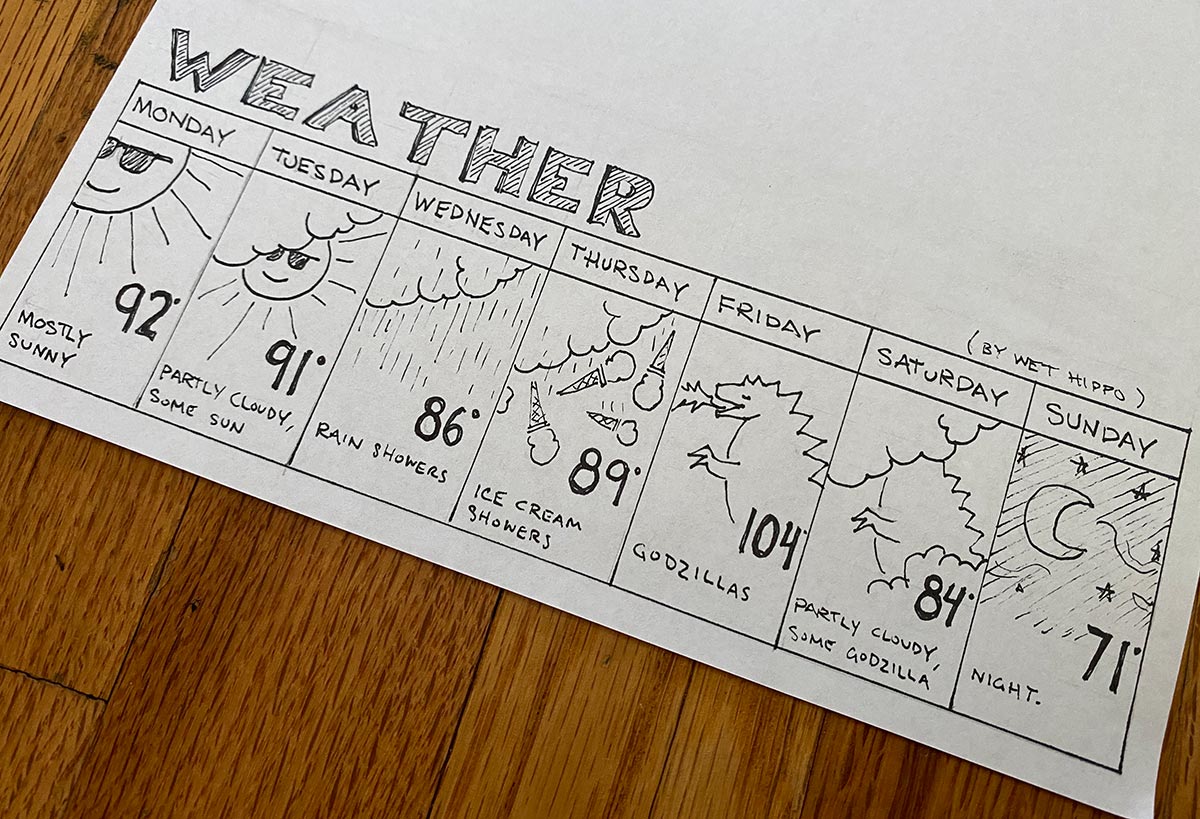
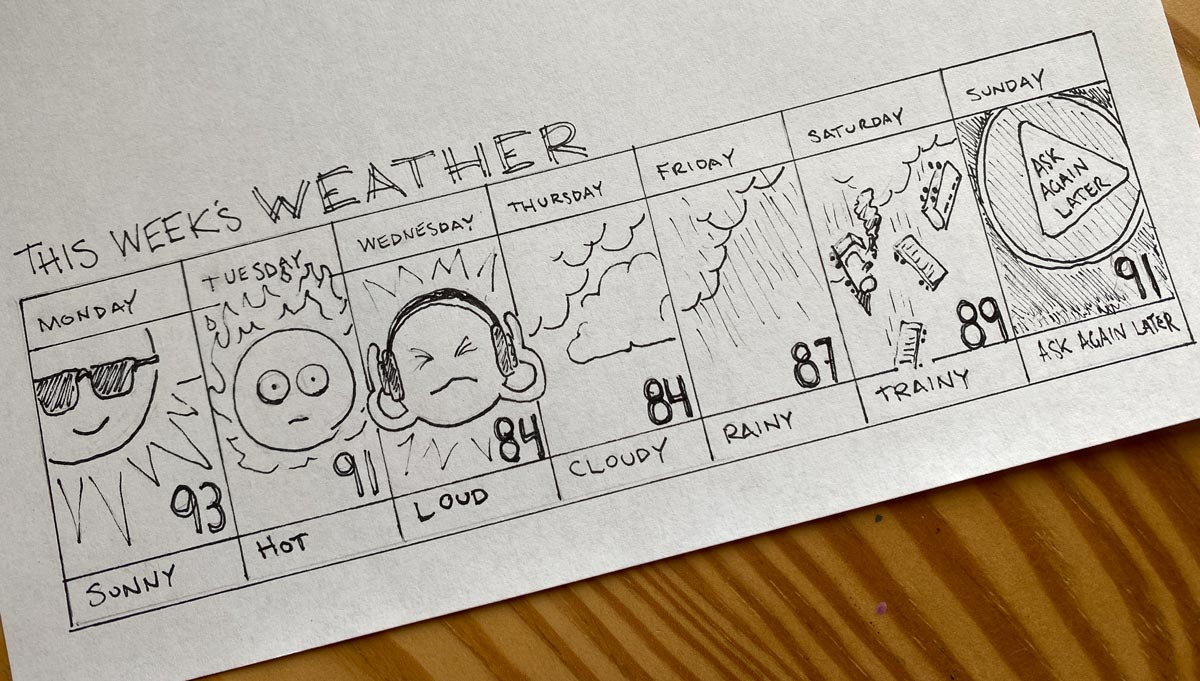
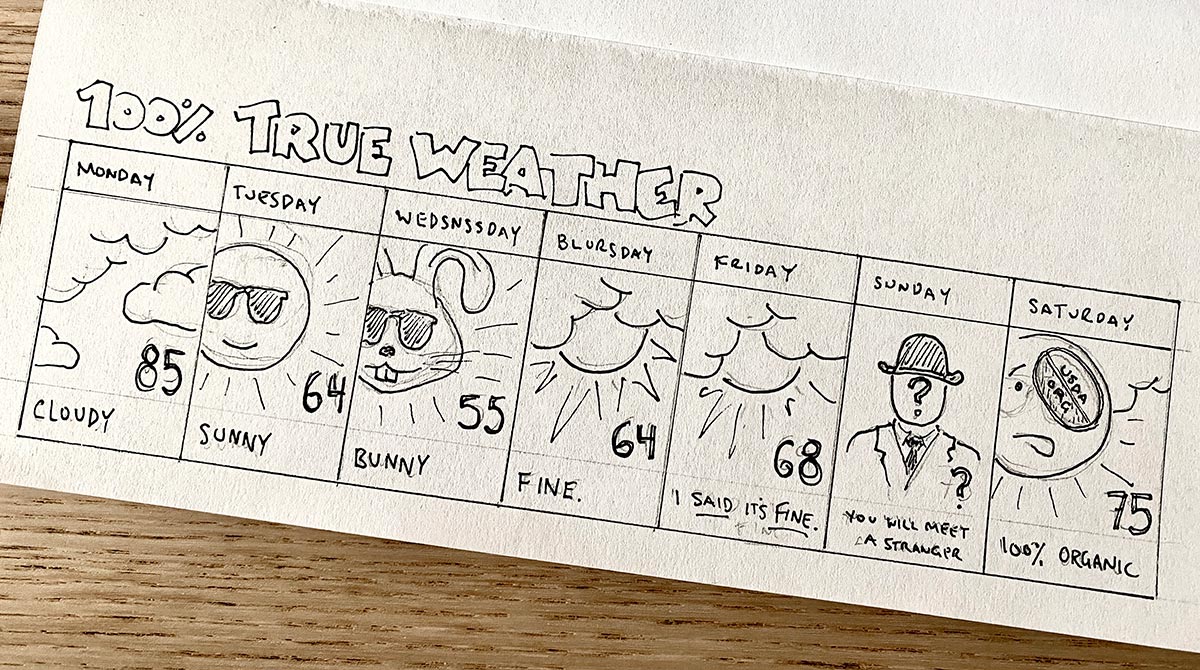
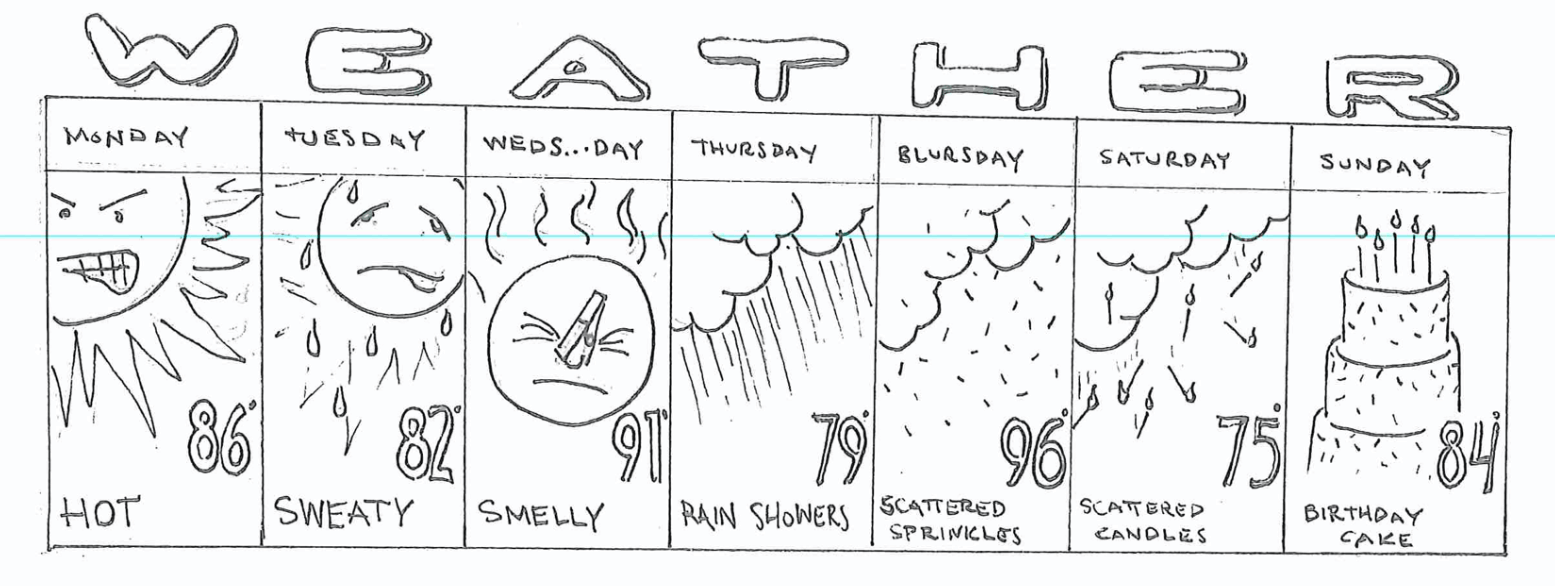
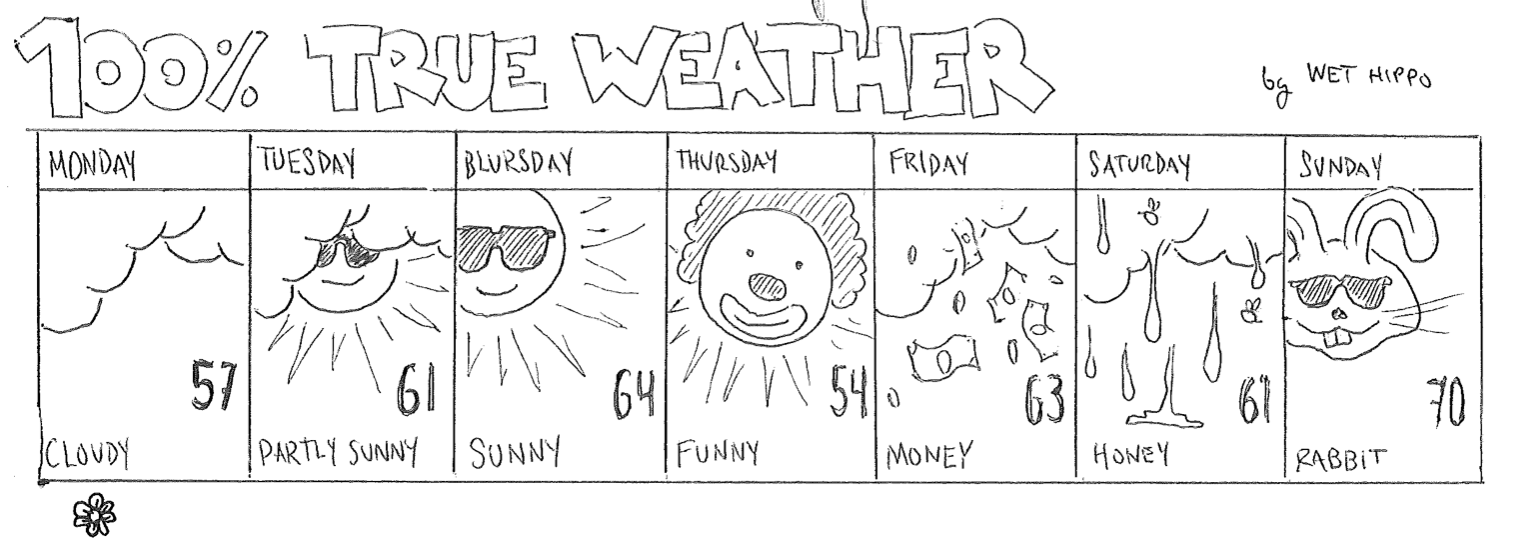
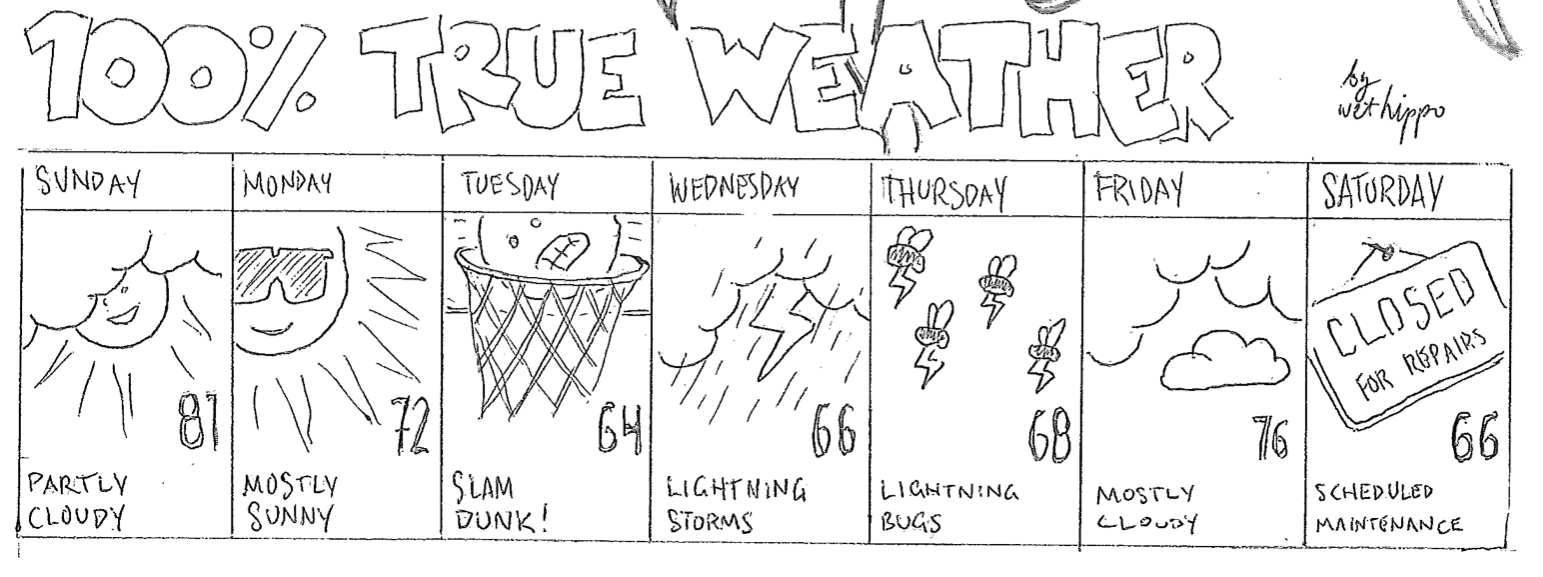
I had only a very small part of it, but I got to make a weather report for each issue, which I very much enjoyed.

Knockoff Sculpture
Look, copying from master craftsmen is a perfectly acceptable practice, right? So I saw and adored this series of concrete sculptures from David Umemoto, and wanted to make my own. What better pandemic pasttime?
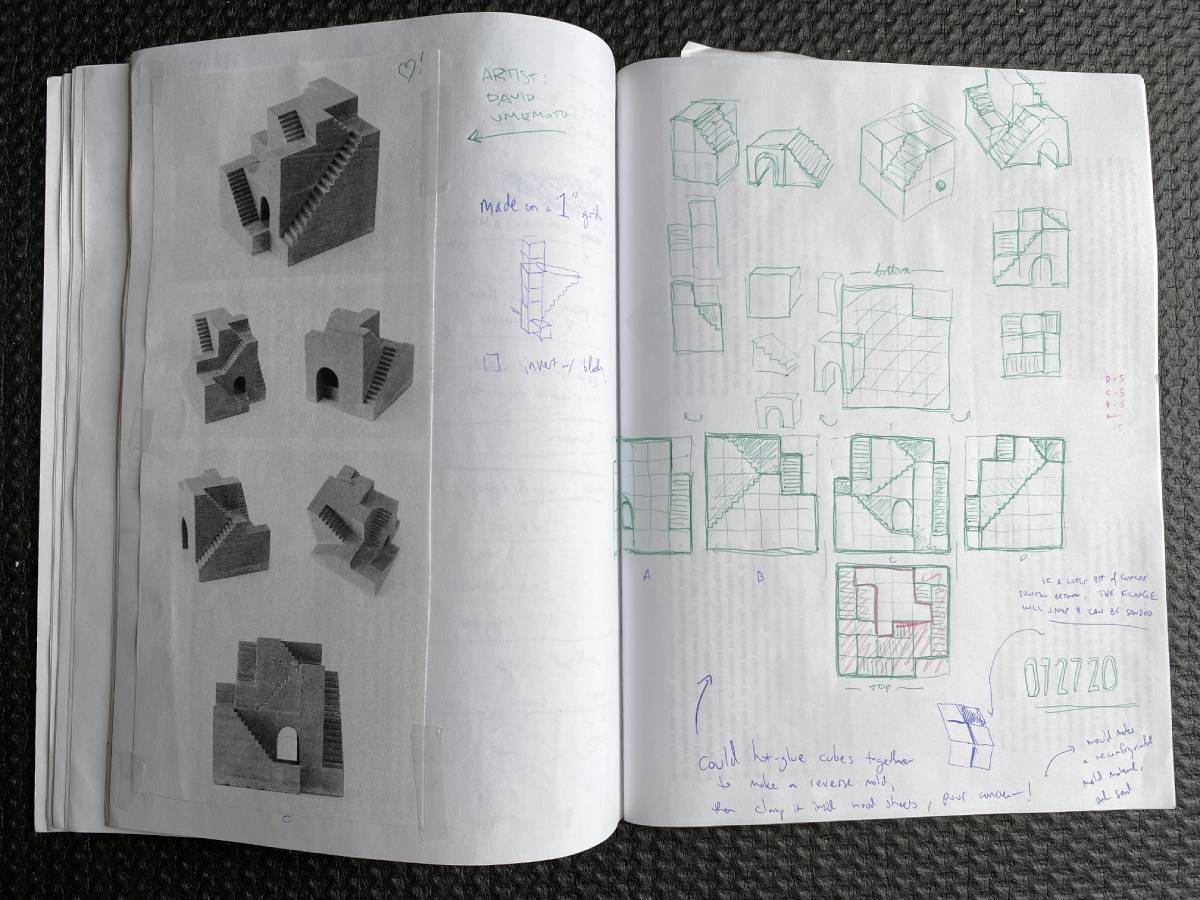
Here’s the original sculpture I wanted to try to copy:

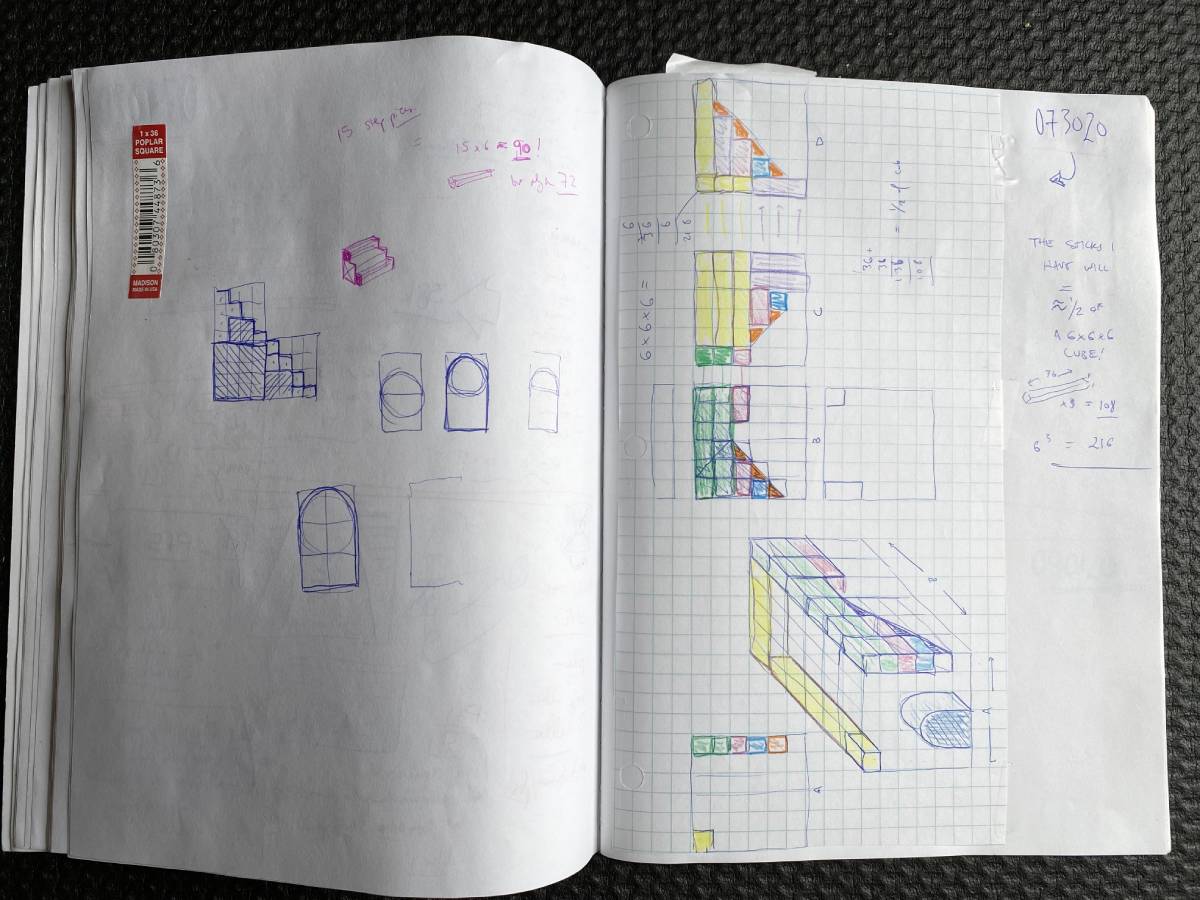
Figuring out how to make an inverted version of this, the negative space that I could pour concrete around, pretty much broke my brain. There were a lot of spreads in my sketchbook that looked like this:
First I realized that I could build myself a set of negative shapes, so I got a bunch of stock wood and started making myself building blocks. These involved a lot of cutting and sanding, and at the end of the day I had a bunch of wooden blocks.
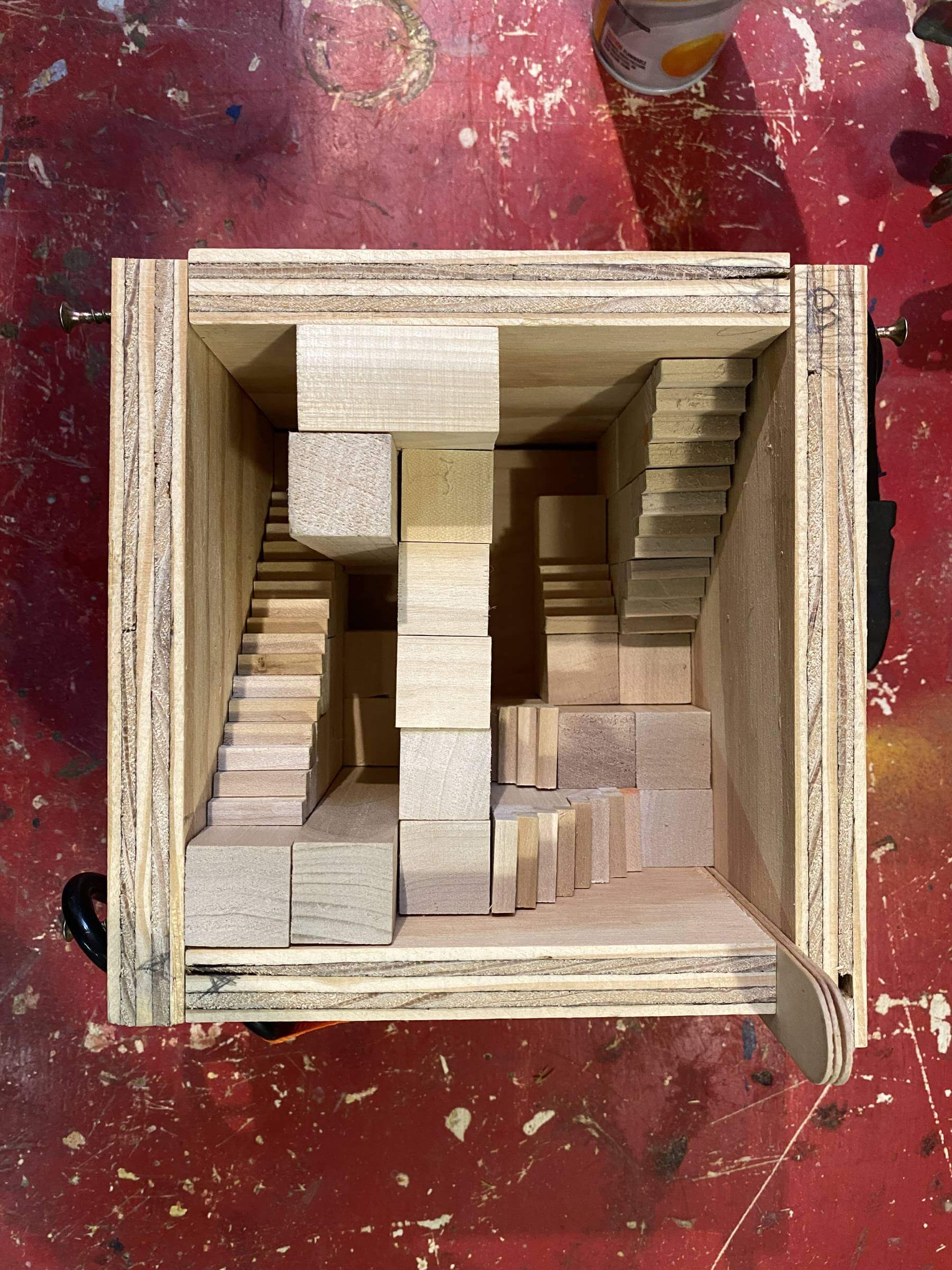
Then it was just a matter of building the reverse version, and putting it in a mold. It went… OK? I had a few attempts that failed miserably because I didn’t build in sufficient wiggle room to get the wooden blocks out, and then destroyed the concrete trying to get out all the molded parts. I applied generous sprays of Pam cooking spray, but who knows if that helped.
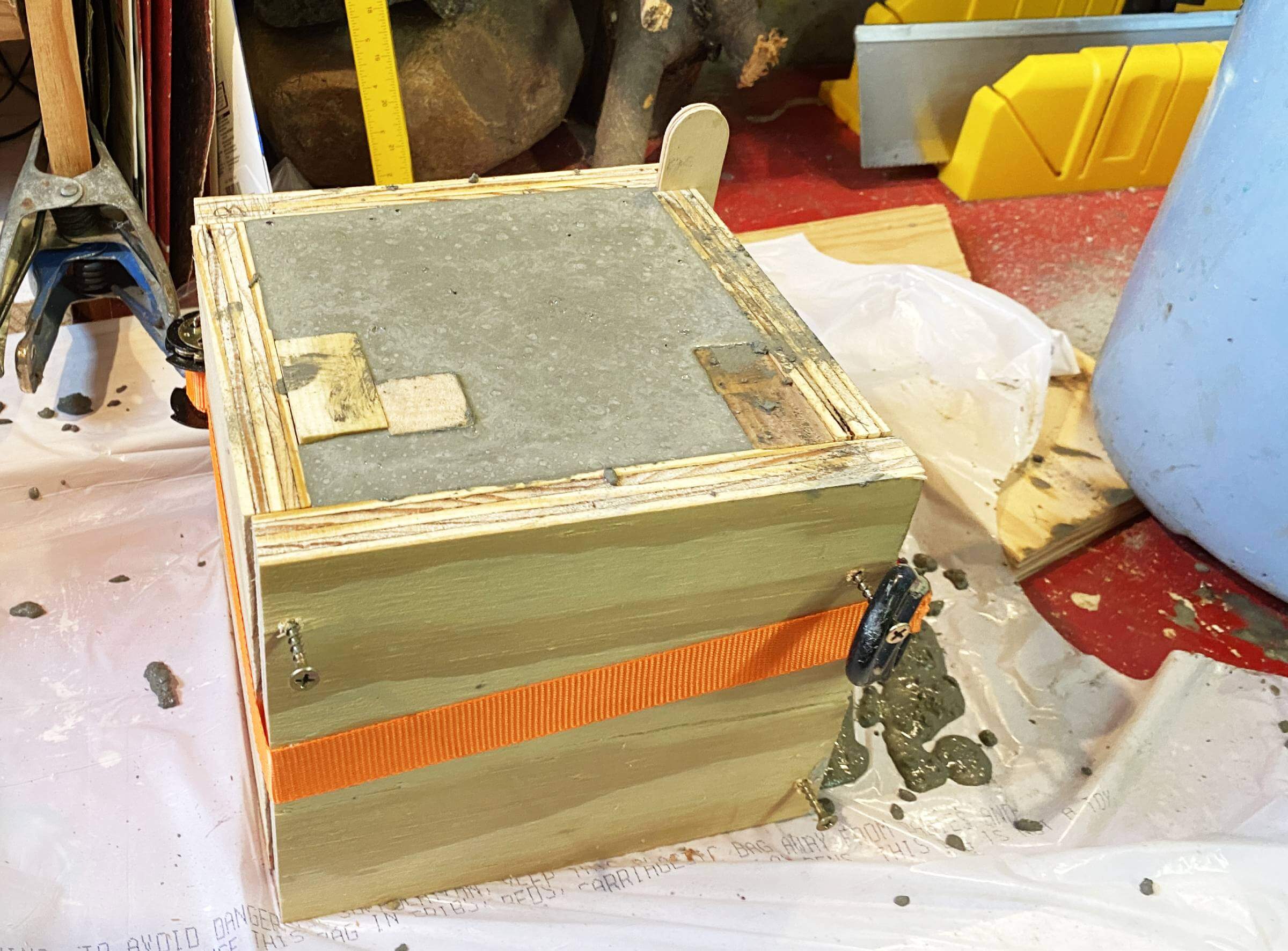
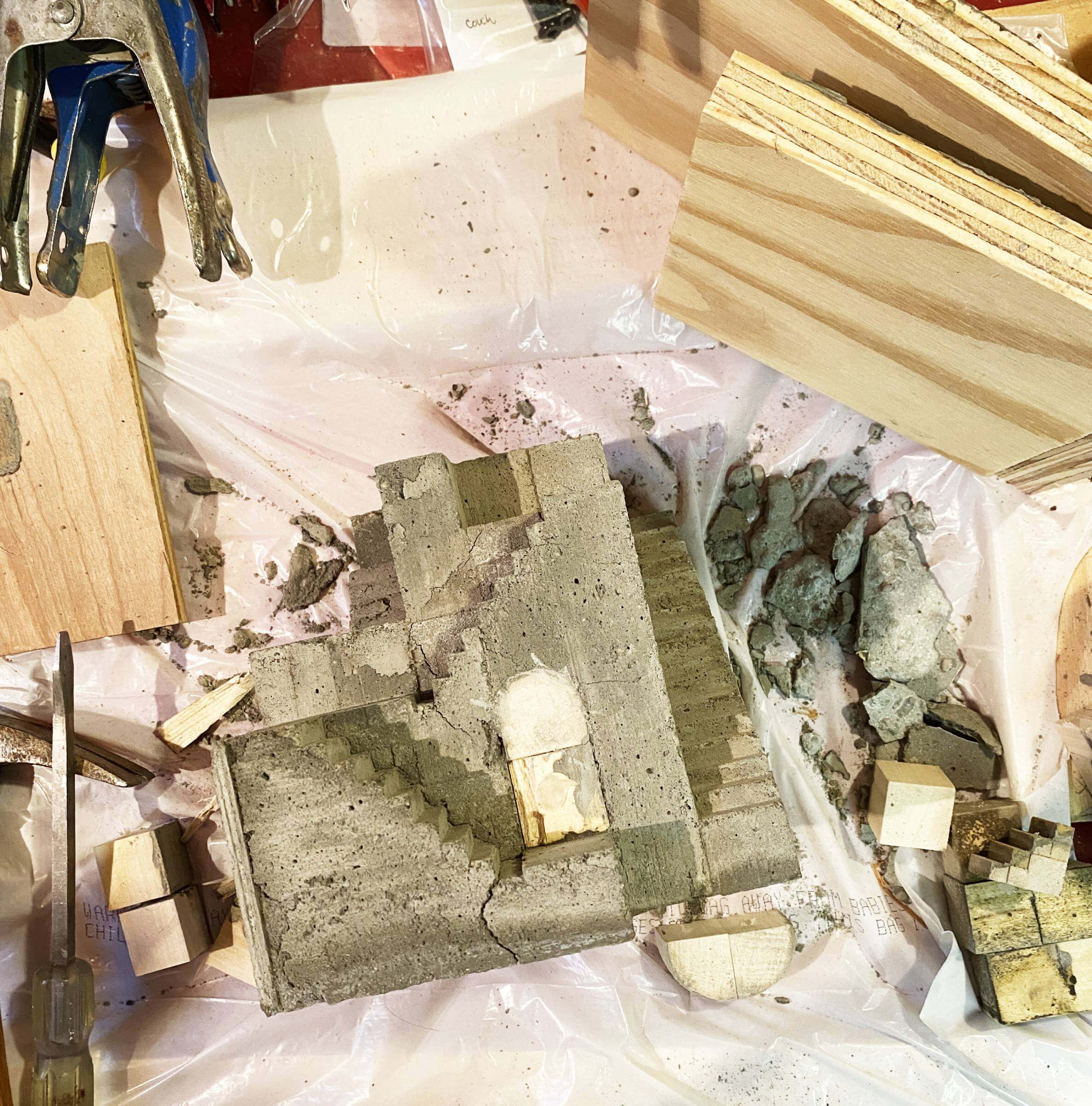
I suppose the original artist must use nylon pieces or something, but at the end of the day I had a draft I was happy enough to keep:
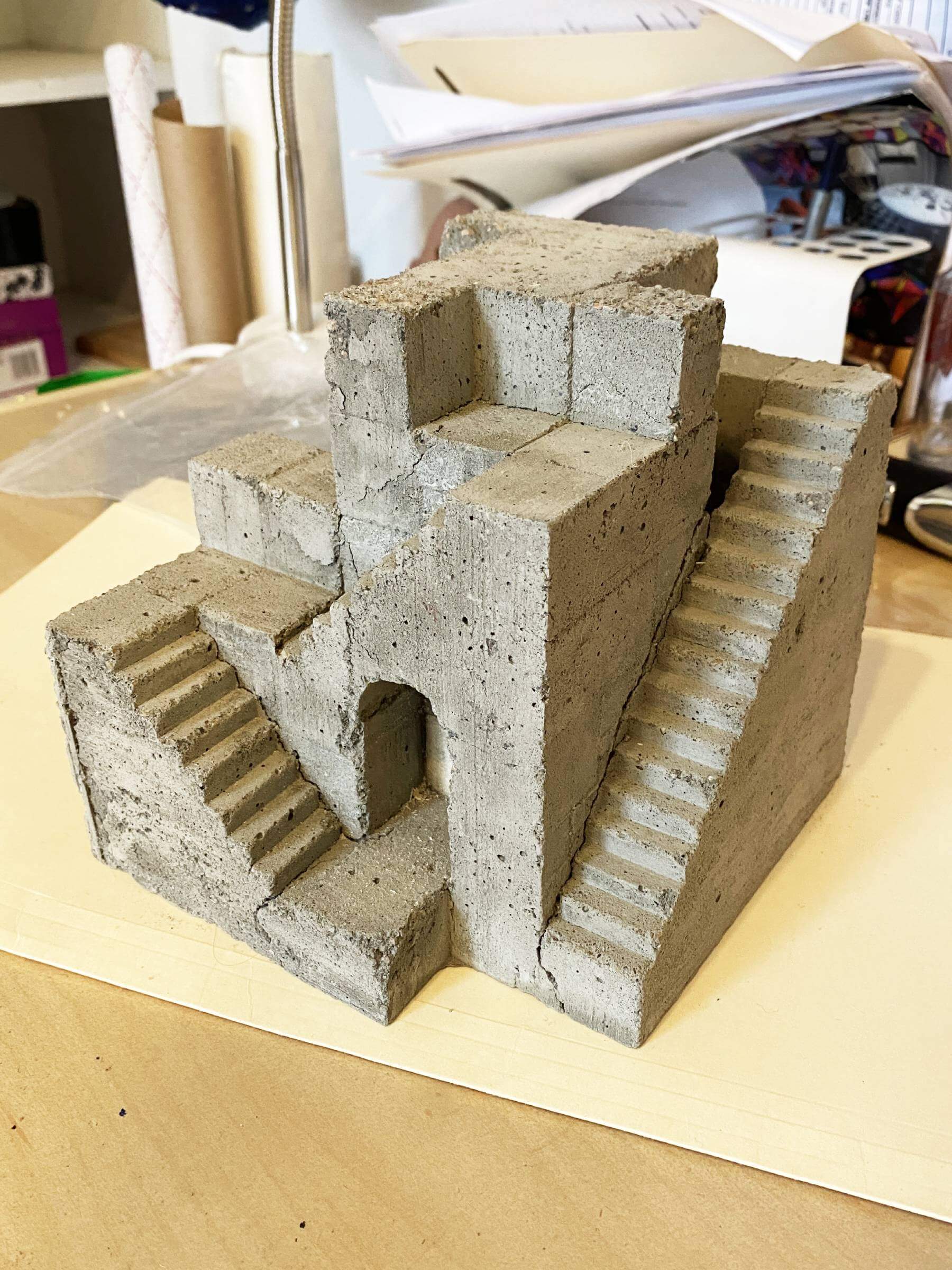
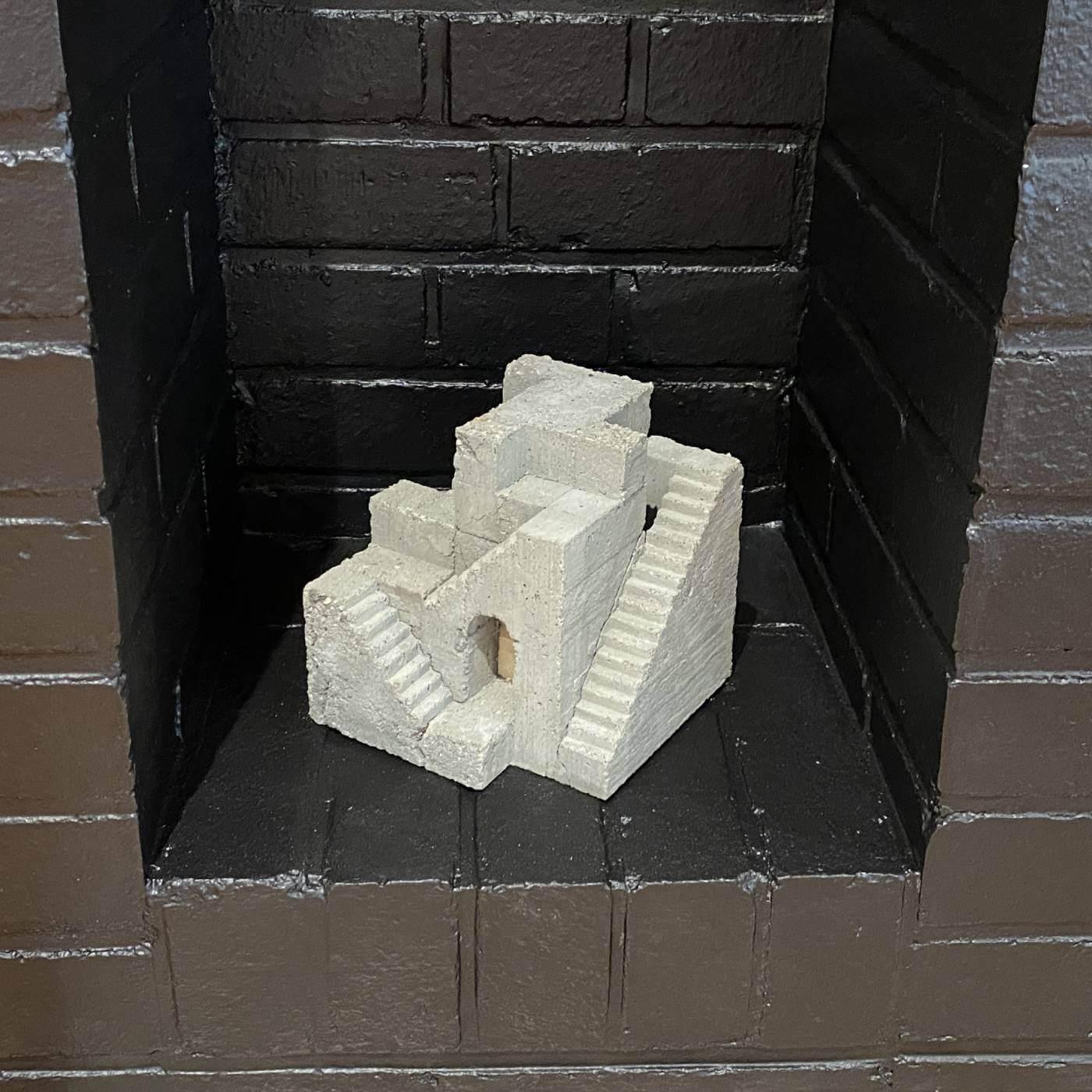
Lots of room for improvement, primarily getting a smoother finish on the concrete, and getting much sharper edges and corners. Also finding a better way to get it all the negative mold shapes out cleanly. Maybe coating the individual pieces of block in some kind of wax?
Guédelon
A pandemic obsession of mine has been the castle of Guédelon.
Look, how frigging up my alley is this? There is a castle in France that is being built right now, using only methods available in the 1200s. They have a good-enough media team so they produce good videos and photos, AND you can go volunteer there.
I made the kids watch all four hours of a BBC special on it called Secrets of the Castle (which is silly in places but super interesting throughout). I watched their short web series called Les Feux de Guédelon.
This is the sort of thing that’s either self-recommending to you or not. Do you want to learn about medieval stone masonry? How they lifted really heavy stuff to build castles? Woodworking? Blacksmithing? Food? Weapons?
The incredible part really is that people are doing this NOW. It’s one thing to read about how this worked on a plaque in a museum. It’s another to see people who are taking years to develop skills and create a microeconomy of everything you need to build a castle.
Yes, I get that there’s a real dorky historical-reenactor thing happening here, but they’re not just camping out in old clothes. They’re making stuff! I ate these videos up, and if there weren’t a pandemic on I would be seriously looking at booking flights to go visit. My consolation is that they will probably still be doing this for ten more years, so I’ll have a chance.
Little Profits
One of my New Year’s Projects (resolutions are Stupid, but time-limited projects are Great) is to memorize a bunch of poems. I have a pretty bad memory, which I chalk up to being a future-oriented person. But I love poetry, and have often wished I had more at my fingertips. So in 2020, I’ve been learning a few poems by heart. Trudy is participating too! There are a few poems she’s learning separately, and some we’re learning together.
January’s poem was Ulysses, by Alfred Lord Tennyson. I’ve always loved this, and gosh it is a fun one to say out loud. It’s long, though, and was a difficult start! The best most helpful tool was finding that there are readings of this poem on SPOTIFY, so I could practice this on a commute or bike ride. Really helpful! I have very much enjoyed having this memorized now - it’s got so many great turns of phrase. Plus it is so dramatic! It’s a real barn-burner.
Next up for February was a shorter but weirdly more difficult one, God’s Grandeur by Gerard Manley Hopkins. Hopkins is fun to recite but with tongue-twisty bits and unnatural phrasing, so it took more brute-force memorization. Very satisfying to get correct though, and also audio versions were very helpful. This isn’t my favorite Hopkins but I was intimidated by his phrasing, and limited myself to something that I could find an audio version of. In retrospect the way some of its word choices just don’t translate anymore make this a less valuable poem to have in my pocket. Modern usages of words or phrases undermine what Hopkins is trying to say, so it takes a lot of mental effort to track with. Valuable for what, Matt? I don’t know, it’s not like I’m pulling these out at parties. But when Hopkins says things like ‘it will flame out’ he means that sparks of light and heat will appear - not that it will end. But I do love the rhythm and alliteration: once you get the hang of why do men then now not reck his rod? it is just FUN to say.
March was The Sun says Yes by Adrian Mitchell; Trudy memorized this whole thing with me. It’s a favorite of ours from ‘A Poem for Every Night of the Year’ and we have written our own extra stanzas before, so it was great to work on this together - especially over our spring break road trip in Arizona, where T & I had a lot of hours together to practice.
For April I added the apocalyptic The Second Coming by Yeats, to go along with the world-shaking events of Corona Time. Turns out I don’t really like this poem! This was the first example that turned out not too hard to memorize, but unsatisfying all the same. It’s so well-worn that the coinage has lost its shine for me. Most of it feels trite.
May has been Billy Collins’ “The Country”, an old favorite and one that I have often wished I had at my fingertips. It’s a great story-poem, and one with a lot of humor that anybody could appreciate. Plus, Collins’ phrasing is so natural - it felt more like memorizing lines for a play compared to Tennyson or Hopkins. But I still found it useful to have an audio version, and I went so far as to rip an mp3 from a reading on youtube and load it on my phone.
What’s in June? I’m not sure, but I expect to do the St. Crispin’s Day speech around that time of the year, and somewhere in here Coleridge’s Xanadu, since I reference that all the time.
I am super into this project, and with five months in, it seems like a sustainable thing I can do for a year’s span.
(Little Profits?) The title of this note comes from the first line of of Ulysses, the poem I started this exercise with: It little profits that an idle king…
Machine Learning Enlightenment
As somebody who works in technology but is not really a programmer, I’ve been in a weird spot with machine learning. It’s obviously interesting and powerful, but I’ve never tried to do anything with it. Sometimes clients ask about it, but our work projects have never been great fits for it, despite the nice buzzword appeal.
But! I finally dipped my toe into this via RunwayML, a more consumer-friendly wrapper for Machine Learning projects, that bills itself as ML for Creatives. I downloaded it a few months back and just now got around to messing with it. Reader: HOLY CATS, it is fun.
Now, a disclaimer: I am really only dipping a toe here. This is very much ‘kindergarten-level’ machine learning, but still: FUN. Adam was right.
There was real learning curve, and I had to watch several tutorials to even understand what the interface was supposed to do. But within a couple of hours I had trained a GPT-2 model on Thomas Traherne’s Centuries of Meditations, which is a series of short devotional paragraphs from a priest / poet in the 1600s.
I actually find this book deeply meaningful. I have given copies to people, I once started a tumblr and twitter account to repost the meditations one at a time. In short: it’s a personal favorite. But it’s got a very singular style, and is made of these short defined units of text, that it seems ready for parody (and therefore machine generation?). The content of the meditations is also very consistent: Traherne’s big thesis is Extreme Optimism: it is easy and delightful to exist in the world, if you attune yourself to the inherit goodness of the created universe.
So.
I gave the thing the original text, set a super-low training cycle, and it’s just: good enough already, in like 15 minutes. After the model is trained, you give the system a text prompt and a desired length of output. It generates a number of attempts at completion.
There are hundreds, thousands, an infinite amount of new texts that are already indistinguishable from real Traherne. Lots that descend into gibberish, but lots that are… pretty good.
Examples
Here are some examples of real Traherne, from Centuries of Meditations.
Real Traherne:
Is it not easy to conceive the World in your Mind? To think the Heavens fair? The Sun Glorious? The Earth fruitful? The Air Pleasant? The Sea Profitable? And the Giver bountiful? Yet these are the things which it is difficult to retain. For could we always be sensible of their use and value, we should be always delighted with their wealth and glory.
Real Traherne:
Yet further, you never enjoy the world aright, till you so love the beauty of enjoying it, that you are covetous and earnest to persuade others to enjoy it. And so perfectly hate the abominable corruption of men in despising it, that you had rather suffer the flames of Hell than willingly be guilty of their error…
And here are some Machine-generated Traherne. In this attempt, I started it with the phrase ‘I have found’
Machine Traherne:
I have found that in all worlds the Laws of Nature are the best that shall be. Had men been made amiable by the desire of the Soul, they would have been made guilty of covetousness. The Laws of Nature contain the power of Loving, Imitating, Contemplate, and Loving. It giveth pleasure to the Soul that enjoys it, and delighteth in the Creature more than He is.
Machine Traherne:
I have found that the Sea of Joy is the end of all Happiness! Is not that because of its endlessness endless? Well, that the Sun and stars are the gates of Happiness, that your soul may be filled with Delights, Honour and Peace! But it is because God dwelleth in seeing them. And here His love hath made this place aflame: which it hath done with all His love: in making it open into many hosts: and manifesting Himself to innumerable other enjoyments.
Yes, there are some that just get stuck in a kind of probability loop, and repeat a phrase over and over.
I have found by the very things that are in Him that are in Him that are in Him that are in Him that are in Him that are in Him that are in Him that are in Him that are in Him that are in Him [ed. I just cut twenty lines of that] that are in Him that are in Him tha (saith of the Lord this Sunday) being fulfilled
And some that are absurd enough to delight.
I have found that the In-laws are conspiring to seduce you, seduce you with lies and trick you into insatiable love and devouring you: to make you to despise them, and to see you impure and enslave you.
The original text is also so old-fashioned with long complicated grammar, that it’s easy to get lost in a sentence - which makes it a pretty good match to how the GPT-2 sentences spin out. If the grammar falls apart towards the end of a long sentence, my brain immediately draws the conclusion that it was me, the reader, who misunderstood this. I think this charitable stance towards older authors helps the machine-generated version get an easier pass here.
This whole exercise is just so FULL of potential. I want to spin up a ‘lost Traherne manuscript discovered in dusty attic’ scam or something.
But wait
A weird, unexpected follow-on here: some of this machine-generated text was… kind of meaningful? I found there are real moments of poetry and insight in these. Several times I stopped and thought: huh, yes, that’s true.
Maybe that’s not surprising? Look, I fed a machine 500 mini-sermons that I find pretty resonant, and it spit out mini-sermons that I still find pretty resonant. But they were written by a machine! Five minutes ago!
My initial reaction was to say, ‘haha, nothing a computer generates actually means anything’, and of course, that’s true in the sense that there is no authorial intent. The author here didn’t mean anything by this text. GPT-2 simply spits out text that is statistically likely to match the model of the training text.
But… what does it matter to me if a paragraph-length sermon came from a guy who lived 450 years ago, or a computer five minutes ago? There’s a different level of experience that happens simply between ME and the TEXT. If I find some revelation via real or fake Traherne, does there need to be any difference?
And if I accept that proposal, am I just one step from the kind of person who is into horoscopes and fortune cookies and looks for ‘signs’ in the world? I don’t know.
There is presumably a whole field of art criticism or literary study devoted to this question, cf elephant-made paintings or Dada in general. But man! It was really fun to experience this dilemma directly, and self-inflicted at that.
 (pictured: the Traherne windows at Hereford Cathedral)